
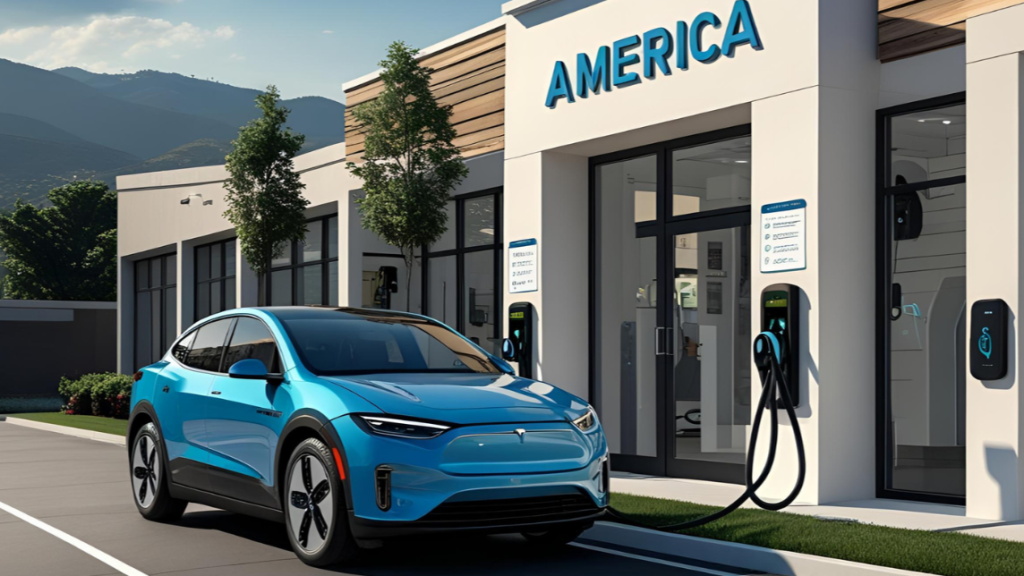
The United States set out an ambitious goal with its $7.5 billion program to build a nationwide electric vehicle (EV) charging network. Three years into the initiative, however, progress has been slow and contentious.
According to a recent Government Accountability Office (GAO) report, as of April 2025 fewer than 400 charging ports had been built under the program. This falls far short of expectations, especially compared to the target of deploying 500,000 chargers by 2030.
The National Electric Vehicle Infrastructure (NEVI) program, created by the Bipartisan Infrastructure Law in 2021, was designed to provide states with $5 billion over five years to build a reliable charging network along highways. The vision was to ensure charging availability every 50 miles along designated corridors. Yet the reality has been much more complex.
Several factors explain the sluggish rollout. At the administrative level, the U.S. Department of Transportation suspended the program earlier this year to review state plans, temporarily halting funding. States have also struggled with regulatory requirements, such as standardizing payment systems and meeting strict technical specifications. Many transportation departments, more experienced in building roads than managing electrical infrastructure, now face steep learning curves in coordinating with utilities, local governments, and private companies.
Technical and logistical hurdles have compounded the delays. Utilities face long planning cycles and equipment shortages when upgrading grids to handle the high power demands of fast-charging stations. Permitting and site acquisition often drag on for months, while supply chain disruptions have slowed the delivery of critical equipment.
Politics has further complicated the landscape. Some states have challenged the federal government over withheld funds, while shifting priorities at the federal level have introduced uncertainty. Recent policy changes, such as the rollback of EV tax credits and cancellation of charging projects, underscore how political headwinds can reshape the pace of infrastructure development.
Despite the slow progress under NEVI, private investment is driving momentum. Companies like EVgo and Electrify America continue to expand their networks, while automakers are investing in their own charging infrastructure. Nationwide, there are already about 219,000 publicly available charging ports, though many are slower Level 2 chargers rather than the high-speed stations needed along highways.
The broader picture reveals both progress and risk. Private companies are filling gaps in urban and suburban areas, yet without a strong and coordinated federal effort, rural regions and underserved communities may remain “charging deserts.” That could ultimately slow the pace of EV adoption across the country.
The federal government’s EV charging initiative highlights a deeper truth: building a reliable national charging network is not simply about money. It requires coordination across agencies, utilities, states, and the private sector—along with consistent political commitment. Without that, even the most ambitious infrastructure programs risk falling short of their promise.