
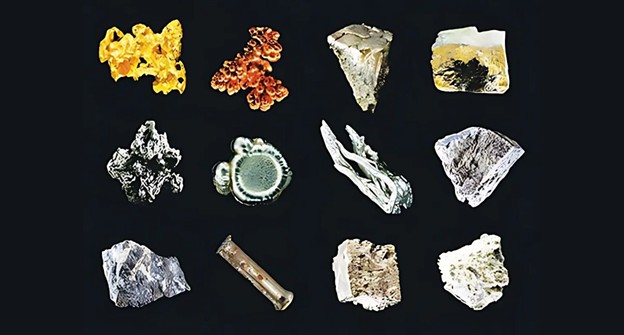
In the age of electric vehicles, wind turbines, smartphones, and satellites, the world is more dependent than ever on a group of 17 obscure elements known as rare earths. These minerals are the unsung enablers of our digital and decarbonized future.
Despite their name, rare earth elements (REEs) are not geologically scarce. What makes them “rare” is the economic and environmental cost of extracting and separating them. They are often found in low concentrations, locked in complex ores, and sometimes accompanied by radioactive materials like thorium. This makes mining and processing both expensive and environmentally sensitive.
Yet, their applications are nothing short of indispensable.
Where Innovation Meets Elemental Power
From neodymium in electric vehicle motors to europium in smartphone screens, from dysprosium in wind turbine magnets to gadolinium in MRI machines, rare earths enable the technologies that define modern life. Without them, our aspirations for net-zero emissions, smart cities, and medical breakthroughs would be much harder to achieve.
These elements are prized for their magnetic, luminescent, catalytic, and electronic properties:
- Magnetism: Essential in permanent magnets used in EVs, drones, and defense systems.
- Luminescence: Powering LED lights, flat screens, and high-efficiency lighting.
- Catalysis: Found in everything from catalytic converters to oil refining.
- Conductivity: Crucial for advanced batteries and semiconductors.
As a result, rare earths are now seen as strategic resources, akin to oil in the 20th century.
The Global Supply Chain Dilemma
The geopolitical risk surrounding rare earths lies not in their location, but in who controls the means of production and refinement.
China currently dominates over 85% of the global rare earth processing capacity. It’s not just about mining; it’s about transforming raw ores into usable compounds. This monopoly creates a single point of failure for critical industries worldwide.
While countries like the U.S., Australia, Brazil, India, and some Southeast Asian nations have substantial reserves, many of them lack the industrial infrastructure or regulatory flexibility to compete. The challenge isn’t geological, it’s geopolitical and technological.
Efforts to diversify supply chains are underway, with strategic stockpiling, recycling, and investment in new mines. However, re-establishing local processing and refining capacity takes years and billions in investment.
Extracting the Future: Economic and Environmental Tensions
Extracting rare earths isn’t just a supply chain issue, it’s a climate and sustainability dilemma.
Traditional methods are toxic. The process involves acid baths, chemical solvents, and radioactive waste, especially in countries with lax regulation. Communities near poorly managed rare earth plants have suffered devastating consequences, from polluted water to health crises.
However, innovation is emerging:
- Recycling rare earths from e-waste and spent batteries.
- Biomining using microbes to leach rare earths from ore.
- Green solvent extraction methods to reduce chemical use.
Balancing the demand for rare earths with environmental responsibility will determine whether the transition to clean energy is truly sustainable or merely shifts the burden elsewhere.
Malaysia, ASEAN & the Race to Localize Supply Chains
Countries like Malaysia are increasingly important in this landscape. Malaysia hosts rare earth processing facilities and has geological similarities to Myanmar, another key supplier to China.
However, Malaysia has also taken a firm stance on environmental safeguards. For example, it imposed restrictions on Lynas Corporation’s plant in Kuantan, demanding radiation-free processing by 2024. The tension between economic opportunity and environmental protection is at the heart of this policy.
For ASEAN nations, the rare earth industry offers a dual promise: a path toward industrial upgrading and energy sovereignty, but only if it’s aligned with environmental justice and public trust.
The Strategic Stakes Are Rising
The conversation about rare earths is no longer limited to supply chain analysts. It’s moved into cabinet rooms, boardrooms, and international negotiations.
Countries are:
- Revising defense procurement to ensure mineral origin traceability.
- Funding domestic rare earth ventures (e.g., the U.S. Defense Production Act).
- Signing bilateral deals with mineral-rich nations in Africa, Latin America, and Southeast Asia.
This strategic realignment will define the next phase of industrial competition, technological independence, and climate diplomacy.
The Race Beneath the Surface
As the world accelerates toward digitalization and decarbonization, rare earths lie at the intersection of economic ambition, technological supremacy, and geopolitical risk. They are the invisible threads stitching together the green and high-tech revolutions.
What’s clear is that the real race is not just to mine more but to mine smarter, cleaner, and fairer. Nations that master the rare earth supply chain – while minimizing harm – will hold the keys to the next industrial age.