
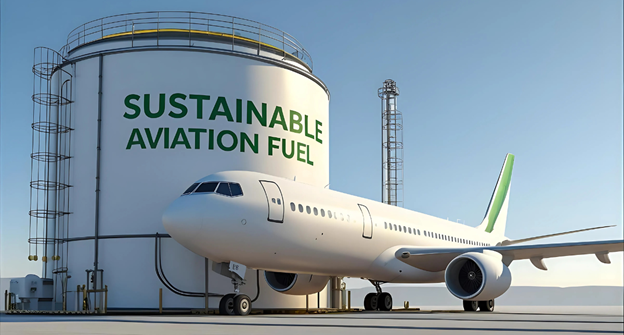
The International Air Transport Association (IATA) just delivered both good news and a sobering wake-up call to the aviation industry. Sustainable Aviation Fuel (SAF) production is set to double in 2025, reaching 2 million tonnes. A milestone that sounds impressive until you realize it represents just 0.7% of airlines’ total fuel consumption.
Let that sink in. After years of ambitious net-zero promises and sustainability commitments, the entire global aviation sector will be running on less than 1% clean fuel by 2025. It’s progress, but it’s also a stark reminder of the mountain the industry still has to climb to reach its 2050 carbon neutrality goals.
The economics tell an equally challenging story. This doubling of SAF production will add $4.4 billion globally to aviation’s fuel bill, with sustainable fuel costing 4.2 times more than conventional jet fuel. IATA Director General, Willie Walsh captured the frustration perfectly: “The pace of progress in ramping up production and gaining efficiencies to reduce costs must accelerate.”
What’s particularly revealing is how this exposes the complex blame game playing out across the aviation ecosystem. Airlines are pointing fingers at energy companies over scarce SAF supplies, while simultaneously calling out Airbus and Boeing for delays in delivering more fuel-efficient aircraft. Energy companies, meanwhile, are grappling with feedstock availability and the massive infrastructure investments needed to scale production.
The policy landscape isn’t helping either. While new mandates in Europe and the UK are driving demand, IATA argues these regulations are making SAF prohibitively expensive rather than accelerating adoption. The industry finds itself caught between regulatory pressure and economic reality, a classic case of good intentions meeting market constraints.
Here’s what’s really at stake: the aviation industry agreed in 2021 to achieve net-zero emissions by 2050, betting heavily on SAF as the primary pathway. But at current production rates and cost levels, that target looks increasingly ambitious. The industry estimates it will need thousands of new facilities and $128 billion in annual capital expenditures over the next three decades to make this vision reality.
This isn’t just an aviation problem, it’s a microcosm of the broader clean energy transition challenge. Whether it’s sustainable fuels, renewable energy infrastructure or carbon capture technology, the gap between sustainability aspirations and practical implementation continues to widen.
The question isn’t whether sustainable aviation fuel will eventually power our flights, it’s whether the industry can accelerate production and reduce costs fast enough to meet its climate commitments without pricing itself out of the market.
Sometimes the most important business stories aren’t about breakthrough innovations or market disruptions. They’re about the grinding, expensive work of transforming entire industries while keeping them economically viable. The aviation sector’s SAF journey is exactly that kind of story.