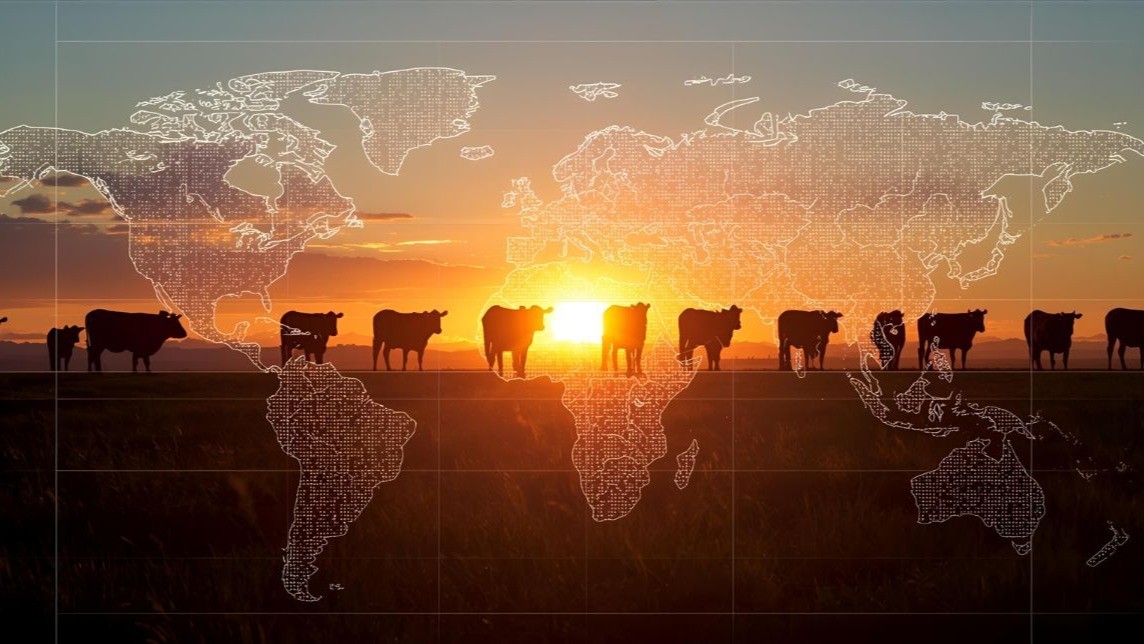
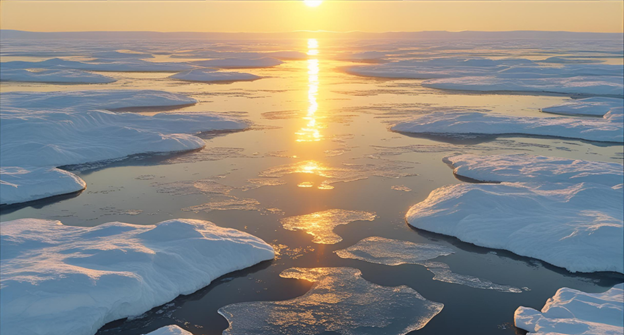
In a world increasingly desensitized to climate warnings, the latest report from the World Meteorological Organization (WMO) is a jarring reminder: the Arctic, already a frontline of the climate crisis, is now warming more than three times faster than the global average.
Between 2025 and 2029, average Arctic temperatures are expected to exceed 2.4°C above the 30-year baseline, driven by feedback loops that intensify global warming, amplify sea-level rise, and disrupt entire ecosystems.
📈 Why the Arctic Matters?
The Arctic has often been viewed as a distant wilderness, rich in symbolism but remote from daily affairs. That illusion is dangerous. The Arctic plays a pivotal role in regulating the Earth’s climate, and its destabilization will have cascading effects on global systems including supply chains, food security, migration, insurance, and capital markets.
As ice melts, it reduces the planet’s albedo, its ability to reflect sunlight. Instead, dark ocean water absorbs more heat, compounding warming globally. Sea-level rise becomes not just an environmental threat, but a capital allocation challenge: major ports, coastal cities, and low-lying economies face mounting risk to infrastructure, insurance liabilities, and population displacement.
Warming in the Arctic affects jet stream patterns, increasing the likelihood of extreme weather across mid-latitude regions, such as North America, Europe, and Asia. For global businesses, this means more frequent supply chain disruptions, commodity price volatility, and increased costs of adaptation across agriculture, logistics, and real estate.
With sea ice retreating, the Arctic is opening up for new shipping routes and resource extraction. This has already triggered strategic military and economic competition, particularly among Russia, China, and NATO allies. Expect new fault lines in energy diplomacy, maritime law, and infrastructure development.
🔥 Exceeding 1.5°C, Crossing the Climate Rubicon?
The WMO report forecasts an 80% chance that at least one year in the next five will exceed 1.5°C of warming relative to pre-industrial levels, a threshold many scientists describe as a tipping point.
The 2015 Paris Agreement explicitly identified 1.5°C as the threshold to avoid the most catastrophic effects of climate change. Breaching this level could trigger irreversible feedback loops, such as Greenland ice sheet collapse, Amazon rainforest dieback, and changes to ocean circulation.
🌍 The Cold Truth of a Hotter North
The Arctic was once seen as the planet’s cooling engine. Today, it’s overheating and in doing so, it’s redefining the boundaries of our climate imagination.
As the WMO bluntly states: “Every fraction of a degree matters.” That fraction could mean the difference between stable coasts and submerged cities, between predictable harvests and global food shocks, between manageable adaptation and systemic collapse.
We’re no longer waiting for the climate crisis to begin, it’s here. The question now is how we respond and whether we act before adaptation becomes retreat.
The Arctic is warming at more than three times the global average and the world cannot afford to look away.
The article below is a reflection on the latest UN-backed report by the World Meteorological Organization (WMO), unpacking the science, economics and social implications behind the data. The signs are clear: we are approaching critical tipping points, with rising sea levels, extreme weather events, and ecosystem collapse looming closer.
This isn’t just a climate issue; it’s a business issue, a human issue and a matter of collective survival. Read on to understand why every fraction of a degree matters and how we must respond urgently and decisively.