
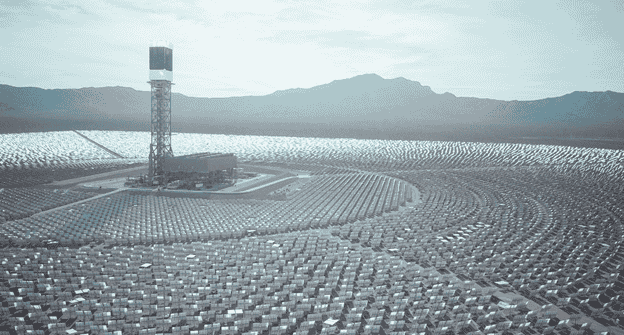
In a significant policy shift, China’s National Development and Reform Commission (NDRC) announced it will scale back subsidies for renewable energy projects after years of rapid expansion. This move comes as China solidifies its position as the world’s leading clean energy powerhouse, boasting nearly 887 GW of installed solar capacity—more than six times that of the United States.
The End of an Era?
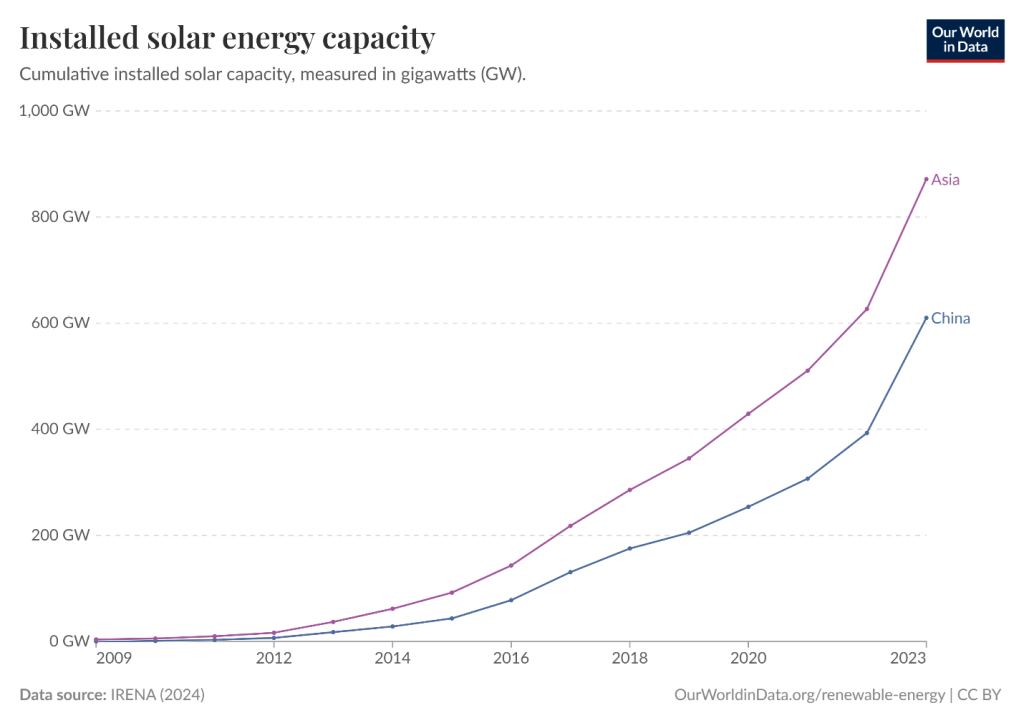
China’s aggressive clean energy policies have helped the country surpass its own targets, with solar installations soaring by 45% in 2024 alone. In 2023, China recorded 609.92 GW of installed solar energy, covering 70% of Asia’s total installed solar capacity for that year. In fact, China met its 2030 clean energy goals six years ahead of schedule. These achievements were largely driven by generous subsidies and guaranteed pricing mechanisms that incentivized renewable energy producers to sell to the grid.
However, the NDRC now argues that renewable energy development costs have fallen significantly, making extensive subsidies less necessary. Moving forward, newly completed projects after June 2025 will be subject to market-based pricing instead of guaranteed tariffs. This shift is expected to reduce government spending while fostering greater competition in the sector.
Implications for the Solar Industry
While the NDRC asserts that power prices for residential, industrial, and commercial users will remain stable, the policy shift could pressure China’s solar industry. With panel prices already declining due to overcapacity, removing financial support may drive smaller manufacturers out of business. This market-driven approach could accelerate industry consolidation, leaving only the most efficient producers standing.
Yet, China’s clean energy ambitions remain intact. The government’s continued collaboration with local authorities suggests that it is managing this transition carefully to prevent disruptions. By moving toward a more sustainable, market-oriented model, China may be positioning itself to lead the next phase of global renewable energy growth.
A Global Energy Shift
China’s decision to recalibrate its clean energy incentives comes at a pivotal time. As the U.S. under President Donald Trump withdraws from the Paris Agreement for a second time and prioritizes fossil fuel expansion, China is doubling down on renewables—albeit with an evolving strategy. This shift underscores a broader transformation in the global energy landscape, where clean power is increasingly dictated by market forces rather than government subsidies.
The question now is whether other nations will follow China’s lead in transitioning from subsidized expansion to competitive market-driven growth. With costs declining and technology advancing, renewables are no longer just a policy priority—they are an economic inevitability.
Sources:
China to roll back clean power subsidies after boom | reuters. Reuters. (2025a, February 9). https://www.reuters.com/business/energy/china-roll-back-clean-power-subsidies-after-boom-2025-02-09/
Installed solar energy capacity. (2024, March 1). Our World in Data. https://ourworldindata.org/grapher/installed-solar-pv-capacity